Performance, Reliability, Scalability, High Availability, And Cost Learning Path
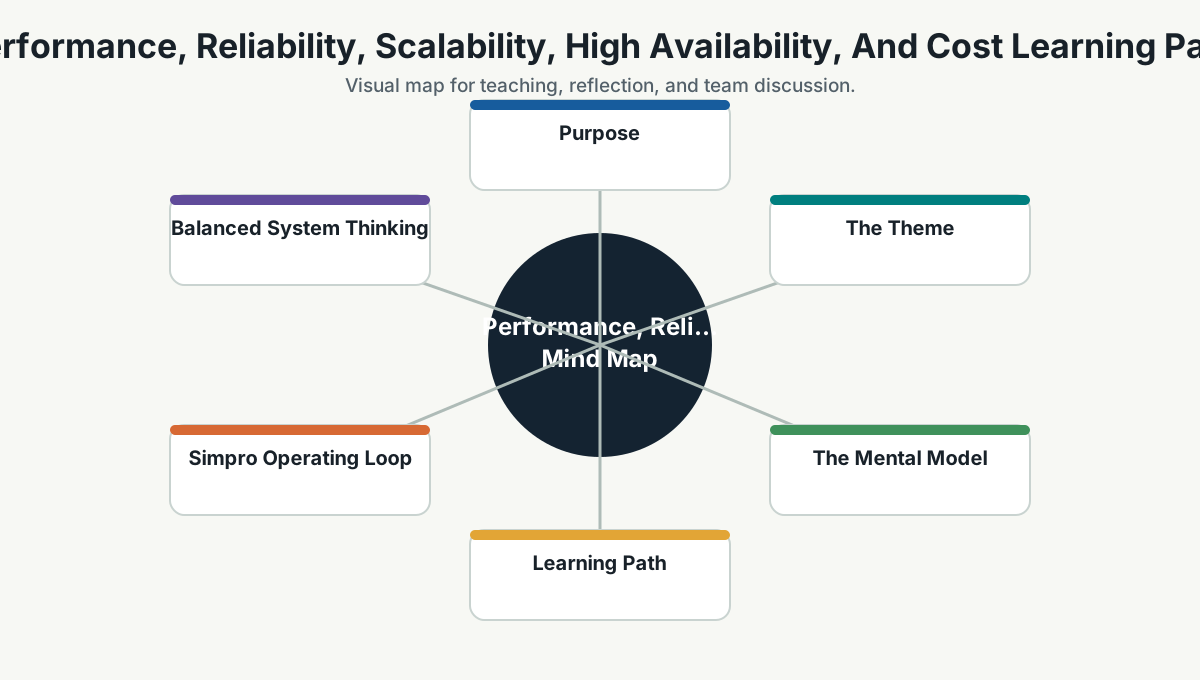
Purpose
This learning path helps Simpro teams build systems that are fast enough, reliable enough, scalable enough, available enough, and cost-conscious enough for the business problem.
The key phrase is "enough." The goal is not gold-plated architecture. The goal is deliberate engineering tradeoffs: better user experience, fewer incidents, simpler operations, and controlled cost.
The Theme
Build systems that keep their promises under real-world load, failure, and budget constraints.
Performance, reliability, scalability, high availability, and cost are connected. A system can be fast but fragile, highly available but too expensive, cheap but slow, scalable but impossible to operate, or reliable on paper but unobservable in production.
The Mental Model
| Dimension | Core Question |
|---|---|
| Performance | Is the system fast and efficient for users and workloads? |
| Reliability | Does it behave correctly over time, including during failure? |
| Scalability | Can it handle growth in users, data, requests, teams, and features? |
| High availability | Can it continue serving when components fail? |
| Cost control | Are we spending deliberately for business value? |
| Observability | Can we see, explain, and improve production behavior? |
Learning Path
Read these pages together:
- Performance Engineering Guide
- Reliability Engineering And SLOs
- Scalability And High Availability
- Cost Control And FinOps
- Observability, Capacity, And Operational Readiness
Simpro Operating Loop
- Define user/business expectations.
- Measure real behavior.
- Identify bottlenecks, failure modes, and waste.
- Prioritize improvements by risk and value.
- Change one thing.
- Verify with metrics and user feedback.
- Capture the lesson in standards, runbooks, dashboards, or templates.
This is the same loop we use for product, engineering, security, platform, and growth. The categories change; the discipline remains.
Balanced System Thinking
Good engineering asks:
- What does the user experience?
- What breaks first under load?
- What happens when a dependency fails?
- What does this cost when usage doubles?
- What metric proves improvement?
- What operational burden are we creating?
- What is the simplest architecture that meets the promise?
The funny but important version: every architecture diagram looks calm until traffic, invoices, and production incidents join the meeting.
Minimum Expectations
Every important service should have:
- Defined owner.
- Basic architecture diagram.
- SLO or service expectation.
- Health checks.
- Logs, metrics, traces, and dashboards.
- Alerting for user-impacting symptoms.
- Capacity assumptions.
- Performance baseline.
- Dependency map.
- Cost owner or cost tag.
- Runbook for common failures.
- Backup/restore or recovery expectation where data matters.
Team Reference Guide
Guidelines For Teams
- Start with user/business expectations before tuning.
- Prefer user-impact metrics over infrastructure vanity metrics.
- Design for failure that is likely, not every imaginary disaster.
- Make cost visible to teams.
- Treat performance and reliability as feature quality.
Reflection Questions
- What promise does this system make to users?
- What would fail first if traffic doubled?
- What cost would surprise us next month?
- What incident would be hard to diagnose today?
Further Study
- Google SRE book: https://sre.google/sre-book/table-of-contents/
- Google SRE Service Level Objectives: https://sre.google/sre-book/service-level-objectives/
- AWS Well-Architected Framework: https://docs.aws.amazon.com/wellarchitected/latest/framework/welcome.html
- Azure Well-Architected Framework: https://learn.microsoft.com/en-us/azure/well-architected/
- Google Cloud Architecture Framework: https://cloud.google.com/architecture/framework
- FinOps Foundation: https://www.finops.org/