Leadership and Change Management
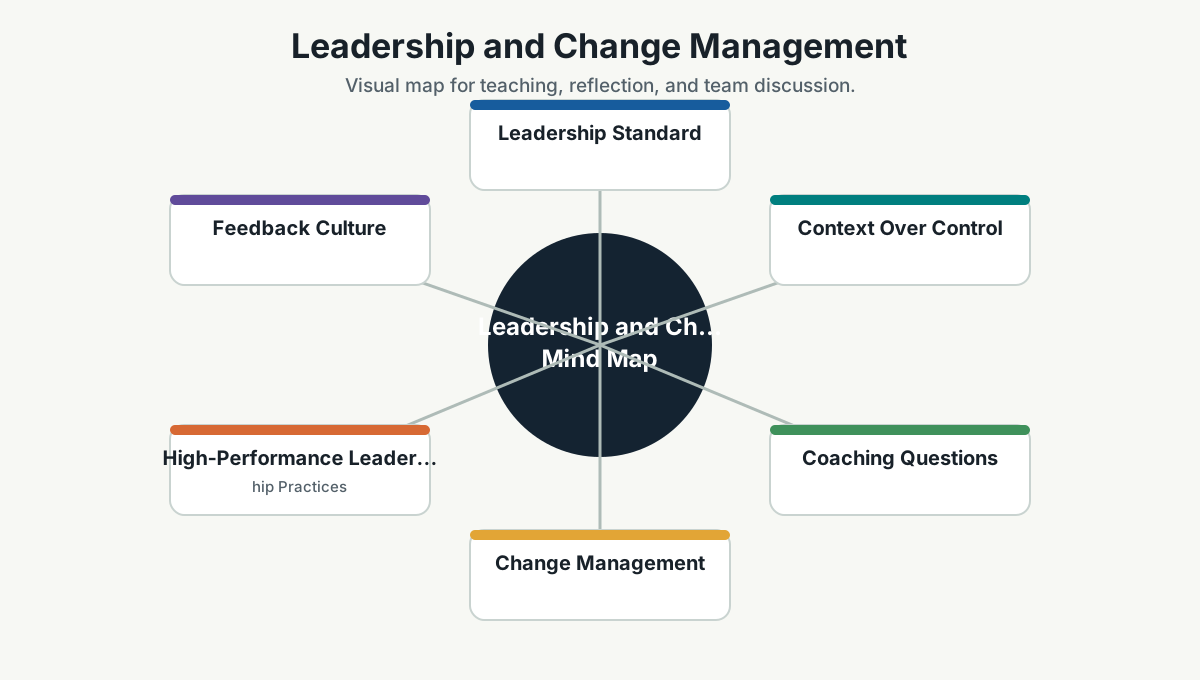
Leadership Standard
Leaders create clarity, capability, conditions, and accountability.
They do not merely assign work. They shape the environment where good decisions and high standards become normal.
Context Over Control
People make better decisions when they understand:
- Company strategy.
- Customer needs.
- Business model.
- Constraints.
- Tradeoffs.
- Risk appetite.
- Decision rights.
Control should be highest when risk is high and capability is low. As clarity and capability grow, decisions should move closer to the work.
Coaching Questions
Use these to develop ownership:
- What outcome are you trying to create?
- What evidence supports this path?
- What alternatives did you consider?
- What is the riskiest assumption?
- What would make you change your mind?
- What is the smallest useful next step?
- Who needs to know?
- What help do you need?
Change Management
Change fails when leaders announce a new process but leave incentives, habits, tooling, and management behavior unchanged.
For each change:
- Define why it matters.
- Name the behavior change expected.
- Identify who is affected.
- Make the first step easy.
- Train and coach.
- Remove conflicting incentives.
- Measure adoption.
- Celebrate real examples.
- Keep adjusting.
High-Performance Leadership Practices
- Make strategy understandable.
- Translate strategy into team outcomes.
- Review metrics without weaponizing them.
- Reward learning and improvement.
- Build successors.
- Use written decision records.
- Make conflict productive.
- Remove persistent blockers.
- Protect focus.
- Maintain a talent and capability map.
Feedback Culture
Good feedback is:
- Specific.
- Timely.
- Behavior-focused.
- Connected to impact.
- Offered with respect.
- Followed by support or expectation.
Leaders should ask for feedback visibly. A team that cannot correct leadership cannot become high-performing.
Decision Discipline
Use a decision log for important decisions:
- Decision.
- Owner.
- Date.
- Context.
- Options.
- Tradeoffs.
- Expected outcome.
- Review date.
Fast decisions are useful only if the organization can learn from them.
Team Reference Guide
How To Explain This Page
Leadership is the work of creating clarity, capability, conditions, and accountability. Change management is not announcing a new process. It is changing the environment so the new behavior becomes easier than the old behavior.
Leaders should move from control to context. Control asks people to wait for instructions. Context helps people make better decisions closer to the work.
Guidelines For Leaders
- Explain why work matters, not only what must be done.
- Delegate decisions with context, constraints, and success measures.
- Coach with questions before giving answers.
- Reward early risk escalation.
- Remove blockers that teams cannot remove themselves.
- Make adoption visible when introducing change.
- Ask for feedback publicly and act on it.
What Good Looks Like
People understand the strategy, know what decisions they can make, surface risks early, and improve their work system without waiting for leadership to notice every problem.
Reflection Questions
- What decision should move closer to the team?
- What context are people missing?
- Which change failed because incentives or habits did not change?