Simpro Field Guide Home
Why This Field Guide Exists
This field guide is meant to become your practical CTO reference book for Simpro. It is not only a knowledge base. It is a way to make important concepts easy to explain, repeat, coach, and apply.
Many of these ideas are already familiar: agile, product mindset, DevSecOps, SRE, DORA, platform engineering, growth engineering, psychological safety, ownership, AI, and continuous learning. The hard part is not knowing the words. The hard part is fixing the ideas in the mind deeply enough that you can discuss them in any room, connect them to real work, and help other people internalize them.
That means the guide needs more than definitions. It needs stories, contrasts, examples, humor, exercises, playbooks, and repeated mental models.
The field guide is built around one operating loop:
Signal -> Problem -> Bet -> Experiment -> Build -> Release -> Measure -> Learn -> Improve
Everything connects to this loop.
The Simpro Belief
Simpro does not need to become a huge company to behave like a serious product-engineering organization. Today, small companies can use AI, cloud, open source, automation, reusable platforms, and disciplined operating models to do work that previously required much larger teams.
But tools alone are not enough. A small team with weak habits simply creates faster confusion. A small team with strong habits creates leverage.
Our advantage should be:
- Customer closeness.
- Faster decisions.
- Less bureaucracy.
- Reusable platform foundations.
- Strong engineering discipline.
- Measured product learning.
- Security and reliability by design.
- AI-assisted productivity with human judgment.
- A culture that turns truth into improvement.
The Core Story
Average teams ask:
What are we asked to build?
High-performance teams ask:
What customer or business outcome should change, what is the smallest useful bet, how do we build it safely, and what evidence will teach us what to do next?
Average teams complete tasks. High-performance teams improve the system.
Average teams discover problems late. High-performance teams make risk visible early.
Average teams use process as a safety blanket. High-performance teams use lightweight process as a learning engine.
Average teams talk about innovation. High-performance teams create conditions where innovation can survive contact with reality.
The Humor Behind The Seriousness
We need humor because serious change becomes heavy if people feel judged. Humor helps teams recognize anti-patterns without defensiveness.
Useful lines:
- Closing tickets is not the same as opening customer value.
- A meeting without decision, learning, or alignment is just a calendar-shaped snack.
- Security at the end is a seatbelt after the accident.
- AI is a very confident intern: fast, useful, and still needs review.
- If every feature is high priority, then priority has left the building.
- A process that nobody uses is not governance. It is office decoration.
The humor should never mock people. It should mock the system habits we want to improve.
How To Use This Field Guide
Use it in five ways:
- Personal CTO reference: read before leadership discussions, reviews, annual day, and strategic planning.
- Team coaching: open one chapter during team meetings and discuss a real example.
- Onboarding: assign role-based learning paths and story cards.
- Operating reviews: use dashboards, maturity models, and playbooks to guide decisions.
- Continuous improvement: convert quests and reflection questions into 30-day experiments.
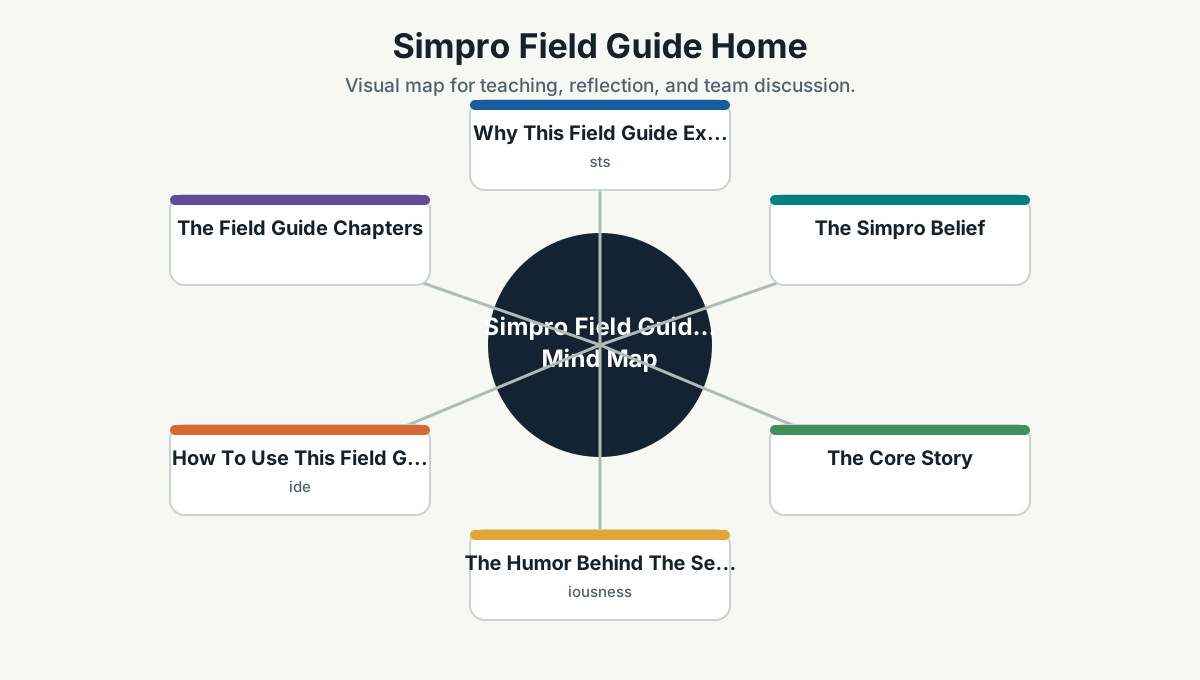
The Field Guide Chapters
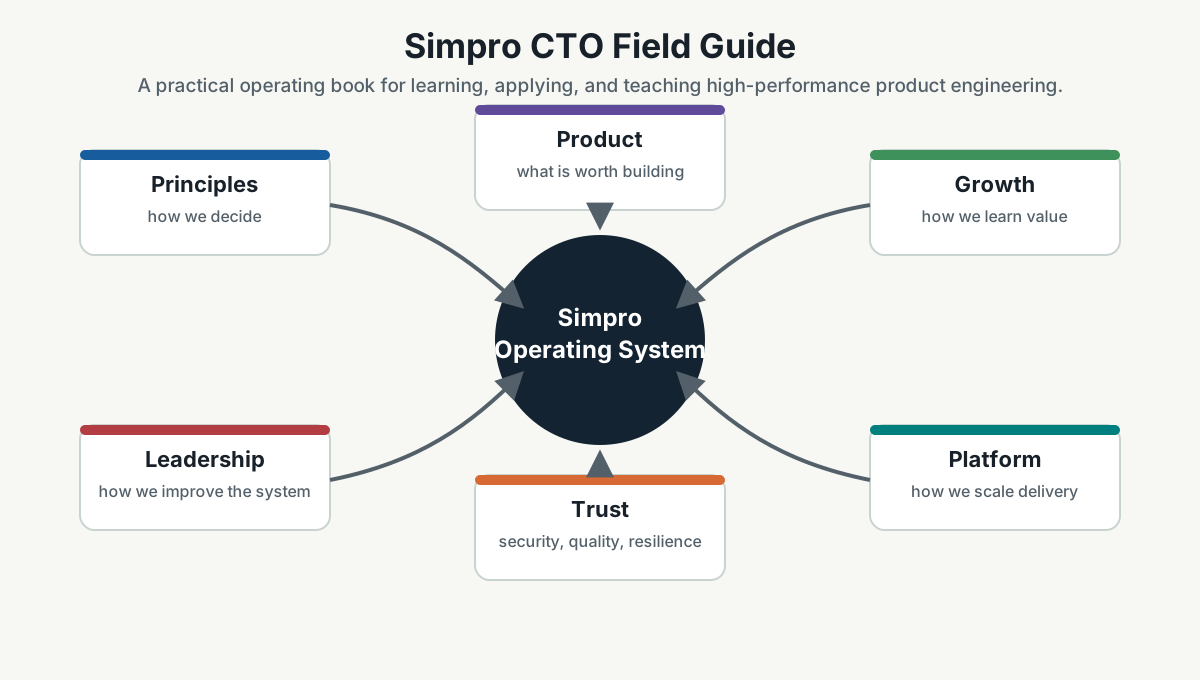
- Simpro Operating System
- Industry Transformation Stories
- Small Company To Market Leader Playbook
- Strong Foundations For Scale
- Reusable Platform Strategy
- Growth Engineering Strategy
- Simpro Technology Review Dashboard And Rituals
- Adoption Plan For Simpro
What Good Looks Like
This field guide is successful when:
- You can explain concepts without searching for words.
- Team leads can connect principles to weekly behavior.
- Developers understand why quality and simplicity create speed.
- QA becomes a risk partner, not a late gate.
- IT and operations are part of product trust.
- Stakeholders understand outcomes, tradeoffs, and evidence.
- Teams run experiments instead of debating opinions endlessly.
- Platform work reduces repeated friction.
- Security, resilience, cost, and observability become normal engineering habits.
First Reading Path
- Read this page.
- Read Simpro Operating System.
- Read Industry Transformation Stories for memorable examples.
- Read Strong Foundations For Scale for the basics.
- Read Reusable Platform Strategy and Growth Engineering Strategy together.
- Use Simpro Technology Review Dashboard And Rituals for monthly review.
Team Reference Guide
How To Explain This Page
Use this page as a reference conversation, not as a checklist to read aloud. Start by explaining why the topic matters, then connect it to current team work, and finally ask what behavior should change.
The most useful way to teach this material is to move from concept to example. Explain the principle, show how it appears in daily work, ask the team where it is currently strong or weak, and finish with one small action.
Guidelines For Teams
- Connect the topic to a current project, customer problem, incident, or decision.
- Translate concepts into visible behaviors.
- Keep the guidance lightweight enough to use weekly.
- Capture decisions, examples, and improvements back into the wiki.
- Review the page again after a project, incident, or retrospective to update what the team has learned.
Reflection Questions
- What part of this topic is already working well for us?
- What part is still mostly theory?
- What is one behavior we can change in the next 30 days?