Facilitator Explanations And Visual Learning Guide
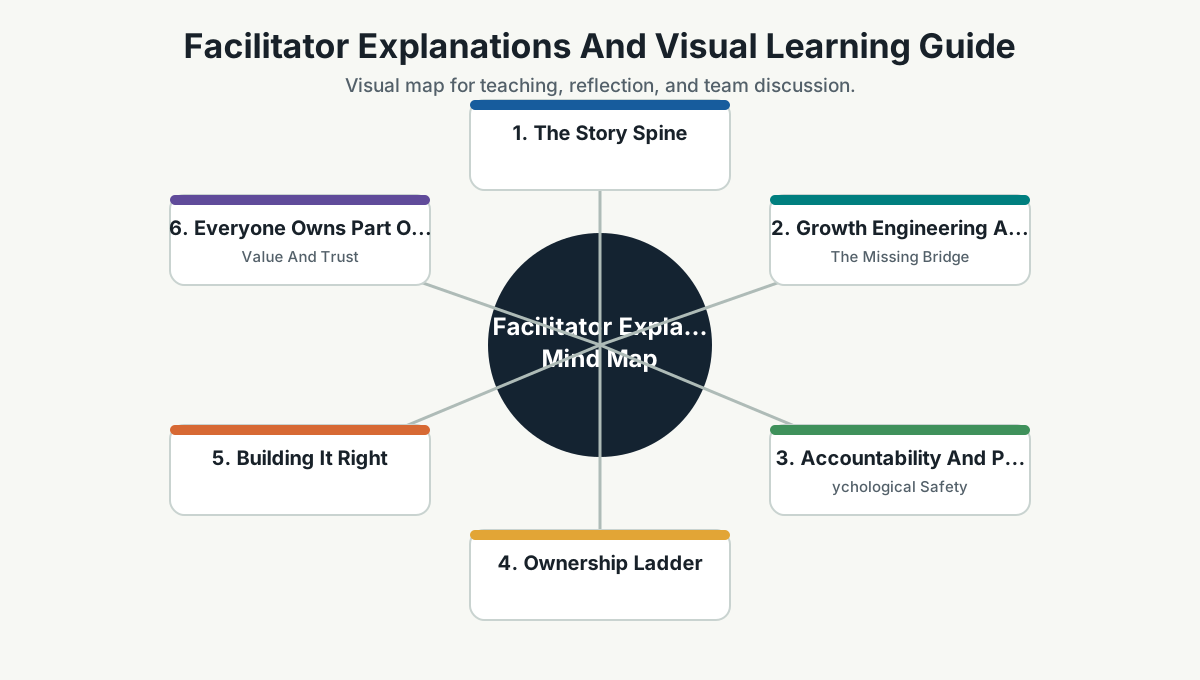
This page turns the wiki from a reference library into teaching material. Use it when explaining the ideas to teams, team leads, stakeholders, developers, QA, IT admins, and operations.
The main idea is simple:
A high-performance team is a learning system. It senses customer and market signals, makes focused bets, builds safely, measures honestly, and improves continuously.
1. The Story Spine
How To Explain It
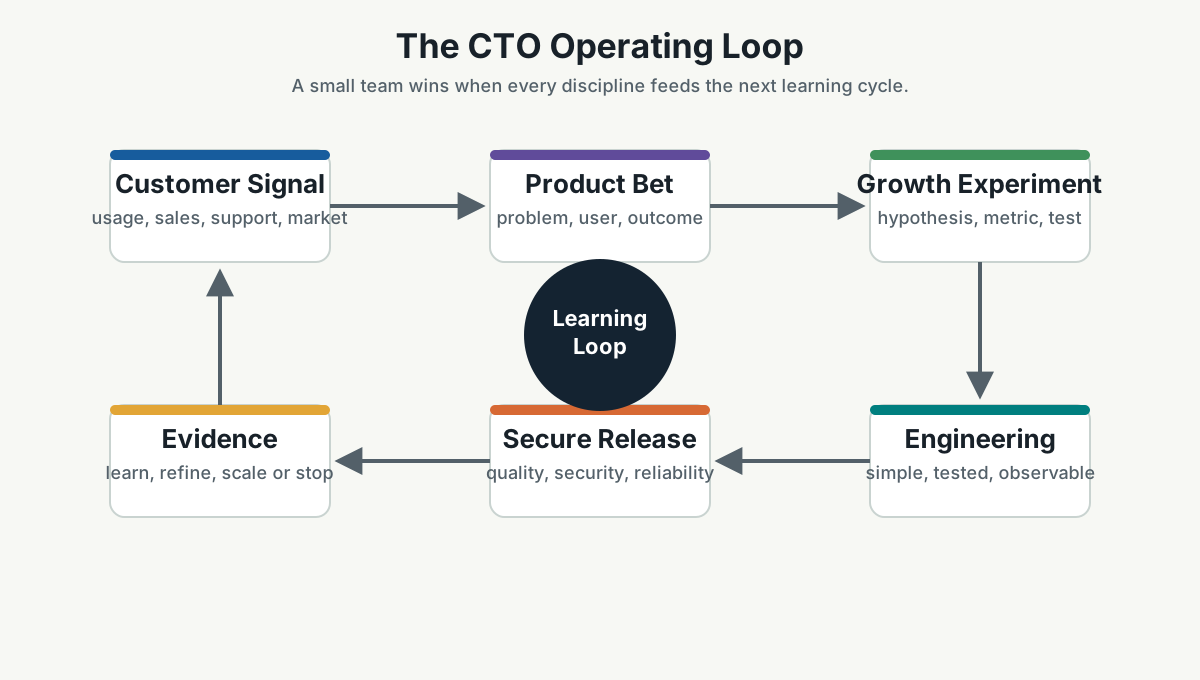
Most teams do not fail because they lack effort. They fail because effort is not connected into a learning loop.
A customer complaint, support ticket, sales objection, usage pattern, competitor move, production incident, or new technology trend is a signal. Average teams often convert that signal directly into a request: "build a dashboard", "add export", "make it faster", "add AI", "create mobile app". High-performance teams pause for a moment and ask what the signal means.
The signal becomes a product bet only after we understand the user, problem, outcome, and success measure. The product bet becomes a growth experiment when we define what we believe will change and how we will measure it. Engineering execution turns the experiment into something real, but engineering is not only coding. It includes simple design, tests, observability, performance, security, and release safety. After release, evidence tells us what happened. Then we refine, scale, or stop.
This loop makes the whole presentation coherent. Product, engineering, DevSecOps, SRE, growth, agile, ownership, and leadership are not separate chapters. They are different responsibilities inside the same loop.
Example
Weak flow:
Stakeholder says "build dashboard". Team builds dashboard. Users do not use it. Team argues whether requirements were clear.
Strong flow:
Stakeholder says managers need better visibility. Team identifies that managers struggle to detect staffing risk before weekly planning. Team prototypes the top three decisions managers need to make. Developers instrument usage. QA tests risk scenarios. Operations checks performance and access. After pilot, the team decides whether to scale, refine, or stop.
Ask The Team
Which part of our loop is weakest today?
Good answers may include:
- We jump from request to build too quickly.
- We do not define success clearly.
- We release but do not measure adoption.
- We detect quality and performance risk late.
- We learn from incidents, but actions are not followed through.
Best Message To Deliver
We do not need a heavy process. We need a visible loop. The loop should be light enough to use every week and strong enough to prevent us from repeating the same mistakes.
2. Growth Engineering As The Missing Bridge
How To Explain It
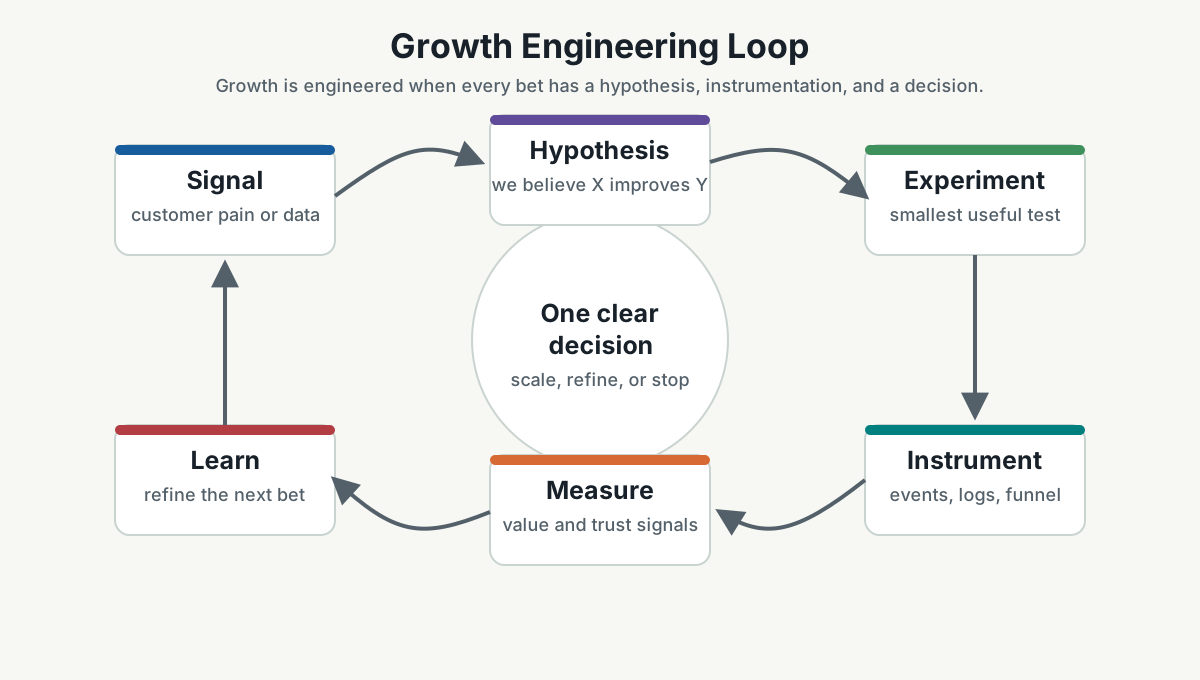
Growth engineering is often misunderstood as marketing automation or conversion tricks. In a product-engineering culture, it means something deeper: we engineer learning about value.
Growth engineering connects product mindset with engineering discipline. Product asks, "What customer behavior should change?" Growth engineering asks, "What experiment will tell us if that behavior is changing?" Engineering asks, "How do we build, instrument, release, and operate that experiment safely?"
For a small company, this is powerful because we cannot afford to spend months building features that do not create adoption, retention, revenue, time saving, trust, or customer success. We need small bets with clear evidence.
Simple Growth Engineering Formula
Use this sentence:
We believe this change will improve this measurable outcome for this user group because this evidence suggests it matters.
Example:
We believe a guided setup checklist will improve activation for new administrators because support tickets show that most onboarding delay comes from missed configuration steps.
This sentence turns a feature idea into a hypothesis. Once we have a hypothesis, we can build the smallest useful experiment.
What To Measure
Growth metrics:
- Activation: did users reach the first meaningful value?
- Adoption: are users using the feature repeatedly?
- Retention: do they come back?
- Conversion: does it influence buying or expansion?
- Time saved: does it reduce manual work?
- Support pain: does it reduce tickets or confusion?
Engineering health metrics:
- Lead time.
- Deployment frequency.
- Change failure.
- Recovery time.
- Performance.
- Security findings.
- Defects found late.
Important Balance
Do not celebrate growth that damages trust. A feature that increases usage but creates data leakage, poor performance, support burden, or operational fragility is not healthy growth.
Do not celebrate engineering health that creates no customer value. A beautiful pipeline, clean architecture, and perfect dashboards are not enough if customers do not benefit.
The bridge is evidence.
Ask The Team
What is one feature we are building now that should be reframed as an experiment?
Best Message To Deliver
Growth engineering is not about guessing faster. It is about learning faster with instrumentation, discipline, and courage to stop weak ideas.
3. Accountability And Psychological Safety
How To Explain It
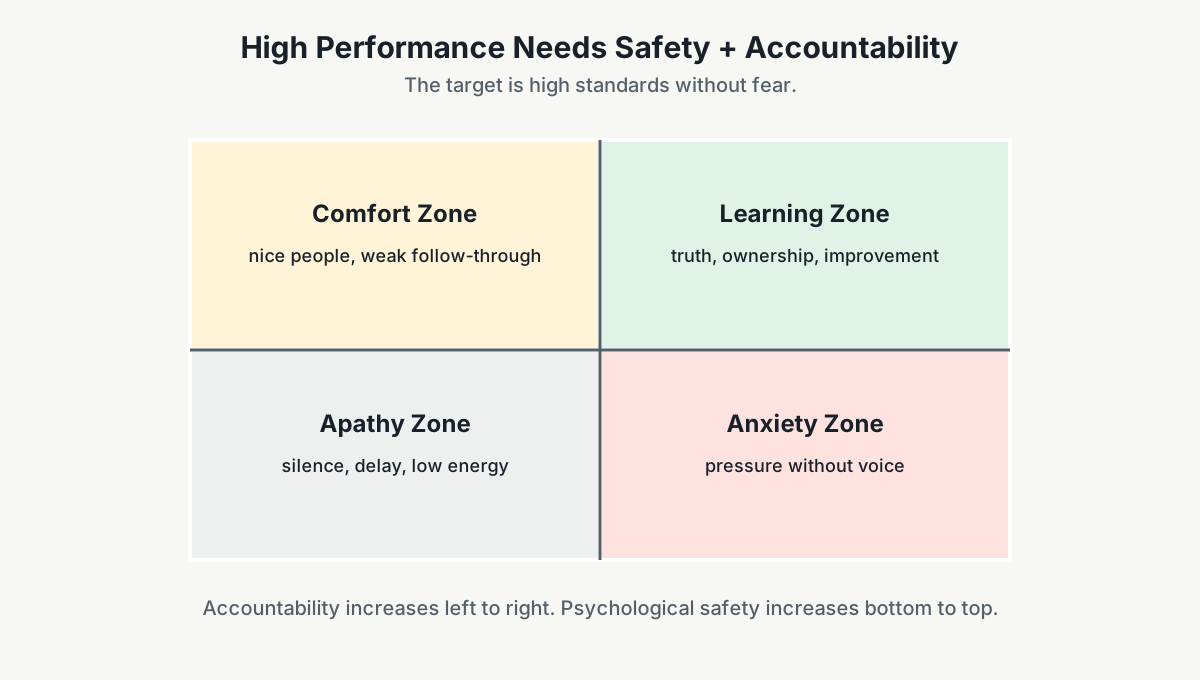
Some teams think accountability means pressure. Some teams think psychological safety means comfort. High performance needs both, but in the right form.
High accountability without safety creates anxiety. People hide mistakes, delay bad news, avoid experimentation, and wait for permission. The team may look disciplined from the outside, but truth is arriving late.
High safety without accountability creates comfort. People are kind to each other, but commitments slip, quality issues repeat, and improvement actions remain vague.
Low safety and low accountability creates apathy. People stop caring because the system has taught them that neither truth nor follow-through matters.
The target is the learning zone: high standards without fear. People can speak up early, challenge assumptions, admit uncertainty, and still follow through with discipline.
Practical Example
An anxious team says:
We found a risk, but let us not raise it yet. Leadership will be upset.
A comfortable team says:
We all agree this is a problem. Let us discuss again next week.
A learning-zone team says:
This risk can affect the release. Here are two options, the tradeoff, and the recommendation. We need a decision today.
Ask The Team
When something is going wrong, do we know early enough?
If people hesitate, say:
The hesitation itself is data. Our job is to design the system so truth appears earlier.
Best Message To Deliver
Blame hides truth. Low standards hide capability gaps. We cannot afford either.
4. Ownership Ladder
How To Explain It
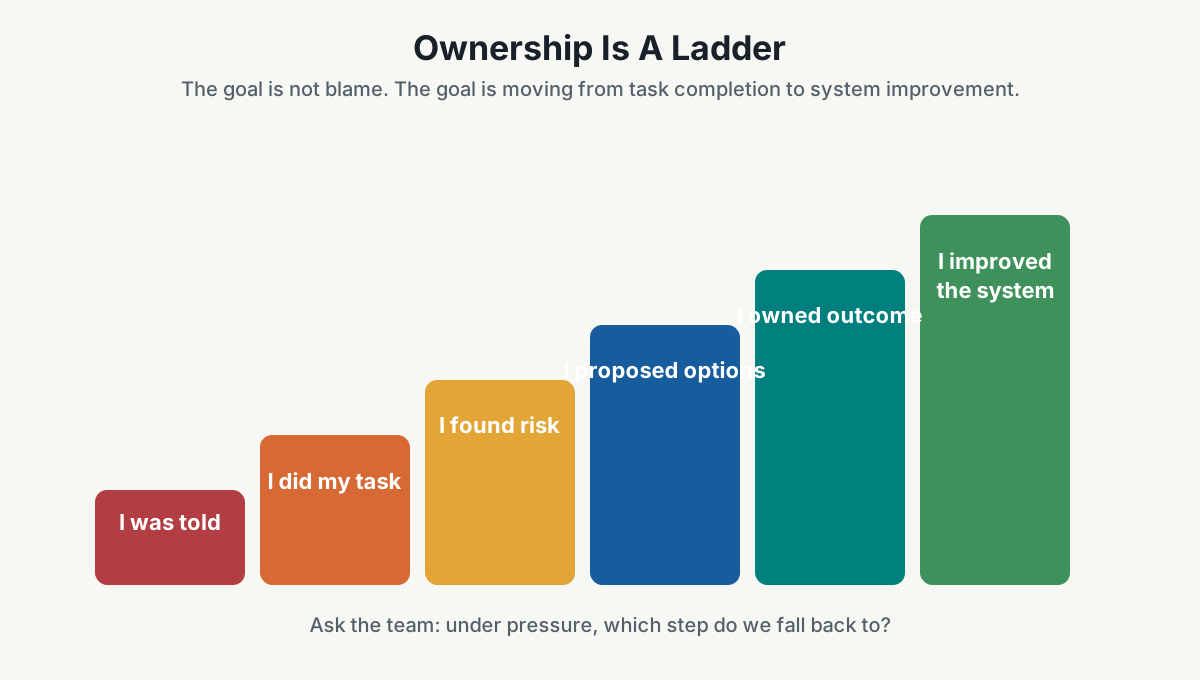
Ownership is not a title. It is visible in how people behave when the work becomes ambiguous or difficult.
At the lowest level, a person says, "I was told." This is instruction-following. It may complete activity, but it does not protect outcomes.
The next level is, "I did my task." This is better, but still limited. A task can be done while the customer problem remains unsolved.
Then comes, "I found the risk." This is where ownership begins. The person is no longer only executing; they are observing reality.
The next level is, "I proposed options." This is stronger because the person is helping the team make a decision, not only reporting a problem.
Then, "I owned the outcome." This means the person cares whether the work creates the intended result.
The highest level is, "I improved the system." This is where the team becomes better because of what happened. A defect leads to a better test. A deployment issue leads to better automation. A confusing requirement leads to a better discovery template.
Example
Weak ownership:
I completed the API. QA found issues. Not my area now.
Strong ownership:
I completed the API, but I noticed the error cases are unclear. I added tests for known cases, documented two open questions, and proposed a fallback behavior before QA starts.
Ask The Team
Under pressure, which rung do we fall back to?
Best Message To Deliver
"Not my job" may be factually correct, but it can become culturally expensive. In a product culture, people do not own everything, but they do own the truth in front of them.
5. Building It Right
How To Explain It
Building the right product is only half the work. We must also build it the right way.
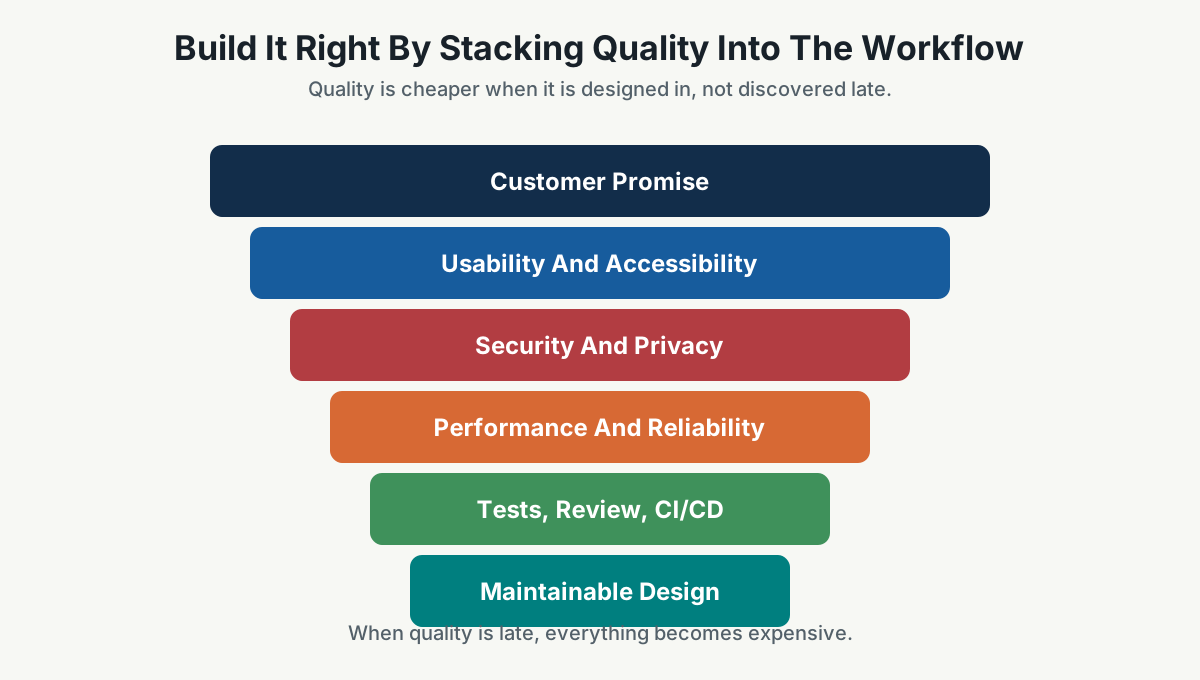
The customer promise is at the top because every technical decision eventually shows up as customer experience. If the product is slow, confusing, insecure, unreliable, or hard to change, customers feel it even if they never see the code.
Usability and accessibility matter because software is not valuable if people cannot use it easily. Security and privacy matter because trust is hard to earn and easy to lose. Performance and reliability matter because users judge software by how it behaves when they need it. Tests, review, and CI/CD matter because they let us move quickly without guessing. Maintainable design matters because future speed depends on today's clarity.
Small Company Version
We do not need a huge process. We need a minimum quality standard:
- Clear problem and success measure.
- Small changes.
- Code review.
- Tests appropriate to risk.
- Basic performance thinking.
- Security and privacy review for sensitive changes.
- Observability for important flows.
- Rollback or mitigation plan.
Ask The Team
Where do we usually discover quality too late?
Common answers:
- During QA.
- During UAT.
- After deployment.
- When performance is tested.
- When a stakeholder sees the feature.
- When support receives complaints.
Best Message To Deliver
When quality is late, everything becomes expensive. The purpose of engineering discipline is not to slow us down; it is to make speed sustainable.
6. Everyone Owns Part Of Value And Trust
How To Explain It
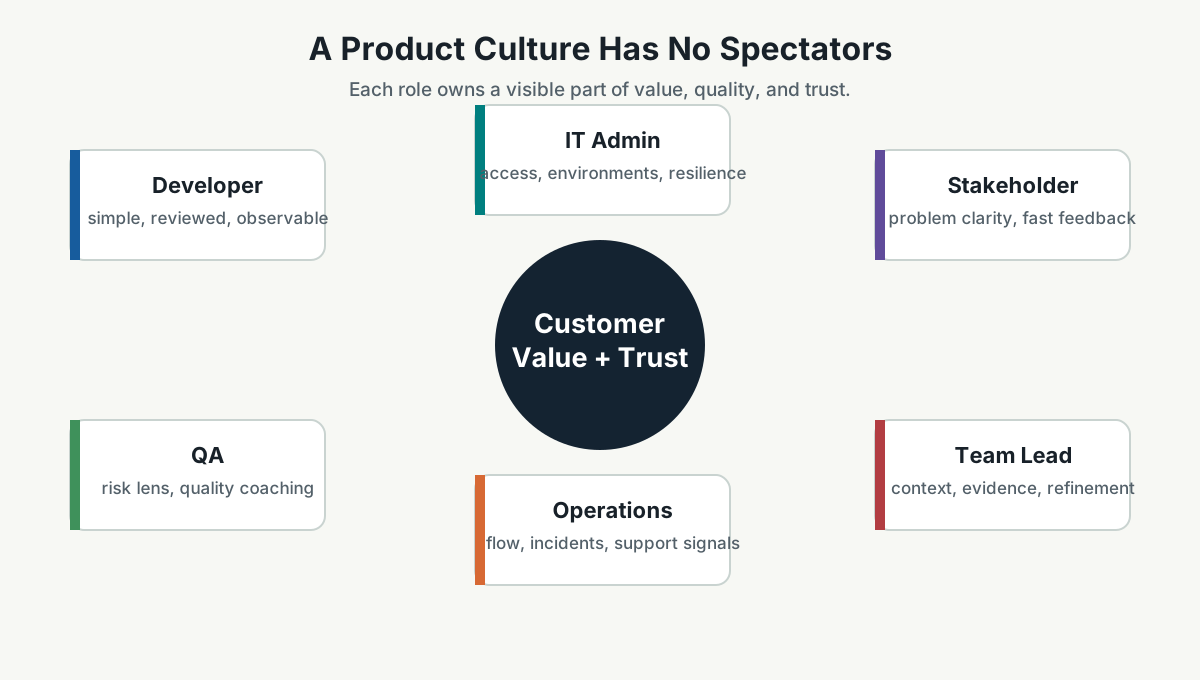
A product culture has no spectators. Everyone owns a part of customer value and trust.
Developers own simplicity, review, tests, and observability. This means they should care not only whether code works locally, but whether the team can understand, change, test, and operate it.
QA owns risk thinking and quality coaching. QA should not be the department of late surprises. QA should help the team ask better questions earlier.
IT admins own access, environments, resilience, and automation. If environments are unreliable or access is chaotic, delivery slows down and security weakens.
Operations owns flow, incidents, and support signals. Operations often sees the real pain after release. Those signals must feed product and engineering decisions.
Stakeholders own problem clarity, tradeoffs, and fast feedback. Stakeholders should not only request features; they should help clarify value and decide tradeoffs.
Team leads own context, commitments, evidence, and refinement. They make sure the team is not just busy, but learning and improving.
Ask The Team
Which handoff creates the most delay or misunderstanding today?
Best Message To Deliver
Handoffs are where ownership often leaks. We cannot remove every handoff, but we can make every handoff clearer, earlier, and more evidence-based.
7. How To Teach This In 10 Minutes
Use this short flow when you have limited time:
- Show the CTO operating loop.
- Explain that all practices connect to the loop.
- Ask where the loop is weakest.
- Show the ownership ladder.
- Ask which rung the team falls to under pressure.
- Show the build-right stack.
- Ask where quality is discovered too late.
- End with one 30-day experiment.
10-Minute Closing Script
The goal is not to become process-heavy. The goal is to make value creation repeatable.
Every week, we should know what signal we are responding to, what bet we are making, what experiment we are running, what engineering discipline protects the work, what evidence we collected, and what we will refine.
That is how an average team becomes a high-performance team.
8. How To Teach This In 30 Minutes
Use this flow for team leads or project teams:
- Story spine: explain the operating loop.
- Growth engineering: convert one current feature into a hypothesis.
- Accountability matrix: discuss whether the team is in anxiety, comfort, apathy, or learning.
- Ownership ladder: identify one behavior to move one rung higher.
- Build-right stack: identify one quality practice to shift earlier.
- Role map: clarify what each role will do differently.
- Commitment: choose one metric and one 30-day experiment.
Example 30-Day Experiment
For every new feature during the next 30 days:
- Write one hypothesis.
- Define one product metric.
- Define one engineering health metric.
- Keep changes small.
- Review evidence every Friday.
9. Best Questions For Reflection
Use these questions during workshops:
- What are we optimizing for: output, outcome, or learning?
- What customer signal are we ignoring because it is inconvenient?
- Where are we using process as a substitute for ownership?
- Where do we discover quality too late?
- What would we stop building if we were honest about evidence?
- Which metric would prove we created value without damaging trust?
- What risk are people afraid to raise early?
- What is one behavior we should stop normalizing?
10. Best Answers To Encourage
Encourage answers that are specific, evidence-based, and actionable.
Weak answer:
We need better communication.
Stronger answer:
Requirements change late because stakeholders see the feature only during UAT. For 30 days, we will run a 15-minute prototype review before implementation for every customer-visible workflow.
Weak answer:
We need better quality.
Stronger answer:
Defects are found late because error cases are not discussed during design. For 30 days, every feature will include three risk scenarios before development starts.
Weak answer:
We should use AI more.
Stronger answer:
We will use AI to generate test ideas and documentation drafts, but code changes must still be reviewed, understood, and covered by tests.
Team Reference Guide
How To Explain This Page
Use this page as a reference conversation, not as a checklist to read aloud. Start by explaining why the topic matters, then connect it to current team work, and finally ask what behavior should change.
The most useful way to teach this material is to move from concept to example. Explain the principle, show how it appears in daily work, ask the team where it is currently strong or weak, and finish with one small action.
Guidelines For Teams
- Connect the topic to a current project, customer problem, incident, or decision.
- Translate concepts into visible behaviors.
- Keep the guidance lightweight enough to use weekly.
- Capture decisions, examples, and improvements back into the wiki.
- Review the page again after a project, incident, or retrospective to update what the team has learned.
Reflection Questions
- What part of this topic is already working well for us?
- What part is still mostly theory?
- What is one behavior we can change in the next 30 days?