Reusable Platform Strategy
Why Platform Strategy Matters
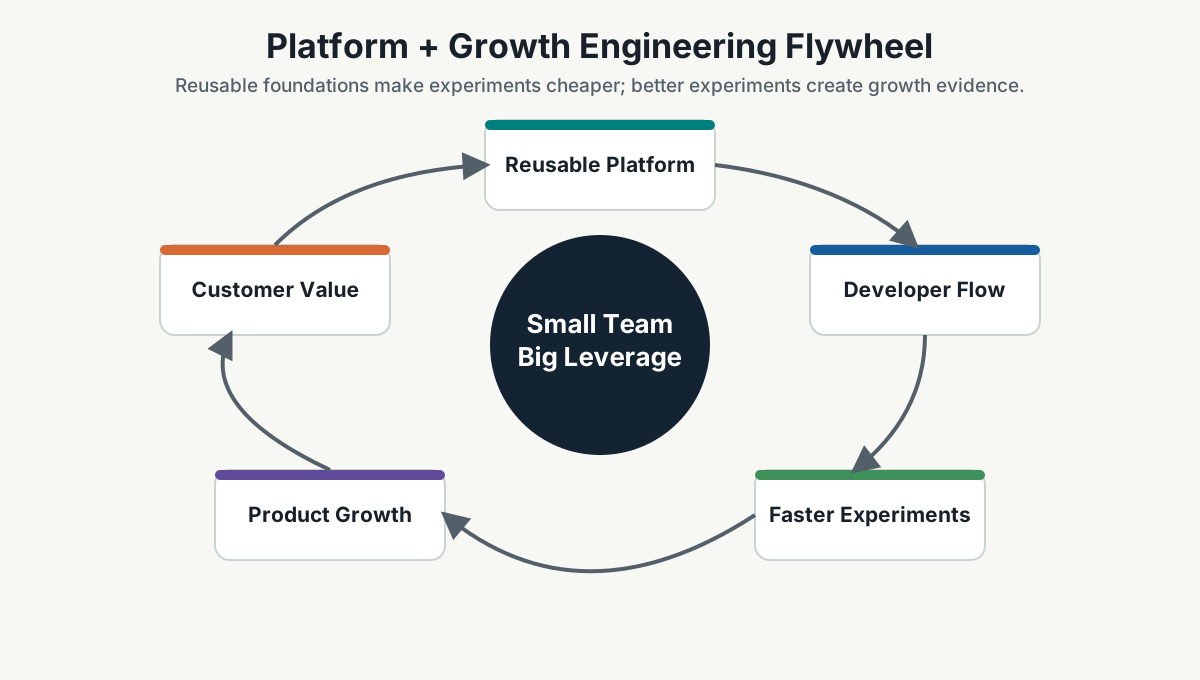
A small company cannot afford every team solving the same problems repeatedly. If every project invents its own setup, deployment, logging, access, configuration, security, and monitoring approach, the organization pays a hidden tax.
Platform engineering reduces that tax.
The goal is not to create a central team that becomes a bottleneck. The goal is to create reusable paths that make the right thing easier.
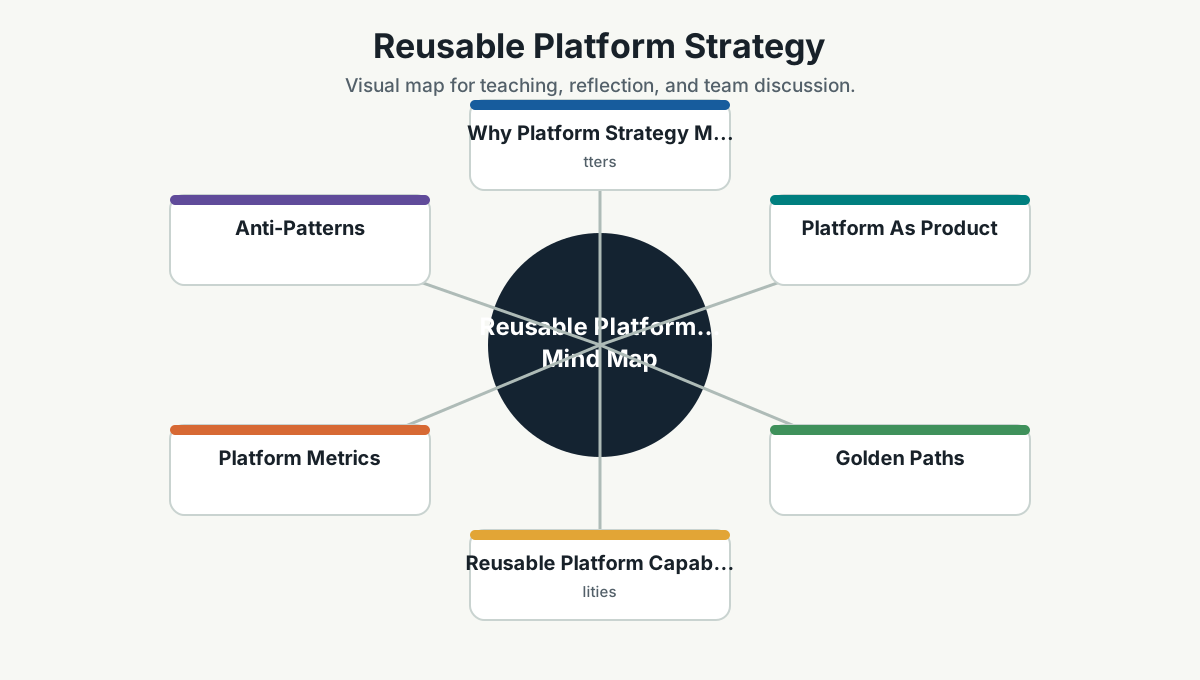
Platform As Product
The platform should be treated as a product for internal users.
Internal users include:
- Developers.
- QA.
- IT admins.
- Operations.
- Security.
- Product teams.
- Data and analytics users.
The platform must solve real pain:
- Slow environment setup.
- Repeated deployment work.
- Inconsistent logging.
- Security drift.
- Manual access requests.
- Hard-to-debug production issues.
- Cost surprises.
- Inconsistent project structure.
Golden Paths
A golden path is the recommended way to do common work.
Examples:
- Create a new service.
- Add a new API.
- Add authentication.
- Add logging.
- Deploy to test.
- Deploy to production.
- Add a dashboard.
- Create a background job.
- Add feature flags.
- Run database migration.
Golden path does not mean forced path for every case. It means the default path is good enough that teams choose it willingly.
Humor:
If the paved road is slower than walking through the bushes, people will choose the bushes and call it innovation.
Reusable Platform Capabilities
1. Project Templates
Standard templates reduce setup time and improve consistency.
Include:
- Folder structure.
- Build pipeline.
- Test setup.
- Logging.
- Configuration.
- Security defaults.
- Documentation skeleton.
2. CI/CD Foundations
CI/CD should make releases boring.
Include:
- Build automation.
- Test automation.
- Security scanning.
- Deployment workflow.
- Rollback support.
- Environment promotion.
3. Observability Kit
Teams should not reinvent observability.
Include:
- Logging conventions.
- Metrics conventions.
- Dashboard templates.
- Alert examples.
- Correlation IDs.
- Error tracking.
4. Security Guardrails
Security should be embedded.
Include:
- Secrets management.
- Dependency checks.
- Access patterns.
- Secure configuration.
- Audit logging.
- Threat model template.
5. Cost Control Defaults
Cost should be visible early.
Include:
- Environment cleanup.
- Resource tagging.
- Cost dashboards.
- AI usage budgets.
- Architecture cost review.
6. Developer Portal Or Knowledge Hub
A lightweight developer portal can start as documentation.
Include:
- How to start a service.
- How to deploy.
- Ownership map.
- Runbooks.
- Templates.
- Standards.
- FAQs.
Platform Metrics
Measure platform success through adoption and friction reduction:
- Time to create new environment.
- Time to first successful deployment.
- CI stability.
- Deployment success rate.
- Number of teams using golden paths.
- Reduction in repeated support requests.
- Developer satisfaction.
- Security issues prevented.
- Cost visibility improved.
Anti-Patterns
Platform As Ticket Queue
If every platform action requires a request to a central team, the platform becomes another bottleneck.
Platform As Policing
If platform standards are imposed without solving team pain, teams will route around them.
Platform As Overengineering
If the platform is built for imaginary future scale before current friction is understood, it becomes expensive decoration.
Simpro Platform Guideline
Start with repeated pain, not platform ambition.
Ask:
- What do teams repeat?
- What do teams get wrong often?
- What slows releases?
- What creates security or reliability risk?
- What should be self-service?
Build the smallest reusable capability that reduces real friction.
Team Reference Guide
How To Explain This Page
Use this page as a reference conversation, not as a checklist to read aloud. Start by explaining why the topic matters, then connect it to current team work, and finally ask what behavior should change.
The most useful way to teach this material is to move from concept to example. Explain the principle, show how it appears in daily work, ask the team where it is currently strong or weak, and finish with one small action.
Guidelines For Teams
- Connect the topic to a current project, customer problem, incident, or decision.
- Translate concepts into visible behaviors.
- Keep the guidance lightweight enough to use weekly.
- Capture decisions, examples, and improvements back into the wiki.
- Review the page again after a project, incident, or retrospective to update what the team has learned.
Reflection Questions
- What part of this topic is already working well for us?
- What part is still mostly theory?
- What is one behavior we can change in the next 30 days?