Developer Help Home
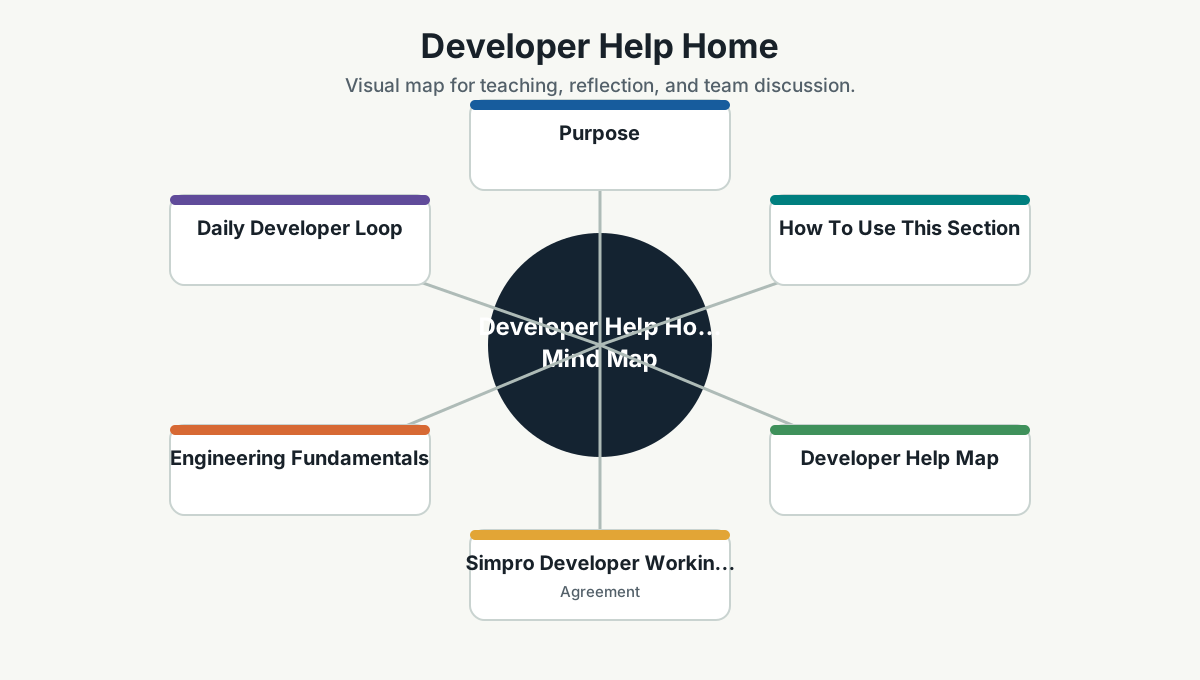
Purpose
This section is a practical command-and-guideline reference for Simpro developers. It covers the tools developers use around the code: editor, Git, terminal, .NET CLI, containers, Kubernetes, Python environments, and Agile/Scrum/Kanban working practices.
The goal is not to replace official documentation. The goal is to give developers a fast, local, Simpro-friendly reference for daily work.
How To Use This Section
Use this section when:
- Setting up a local environment.
- Debugging a command-line problem.
- Working with Git branches and commits.
- Running .NET projects and tests.
- Building or running containers.
- Testing Kubernetes locally.
- Creating Python virtual environments.
- Understanding Agile/Scrum/Kanban expectations.
Developer Help Map
Simpro Developer Working Agreement
Developers should aim to:
- Keep changes small and reviewable.
- Make intent clear in commits and pull requests.
- Run relevant tests before asking for review.
- Prefer repeatable commands over manual steps.
- Document unusual setup or operational steps.
- Treat local environment friction as a signal for platform improvement.
- Use AI tools with judgment and verify generated output.
Engineering Fundamentals
For broader team engineering practices, use Simpro Engineering Fundamentals Playbook. It adapts the structure of Microsoft's Engineering Fundamentals Playbook into Simpro guidance around source control, work tracking, testing, CI/CD, security, observability, agile, design reviews, code reviews, retrospectives, engineering feedback, and developer experience.
Daily Developer Loop
- Pull latest changes.
- Check current branch and worktree status.
- Run or update dependencies.
- Run the app locally.
- Make a small change.
- Run focused tests.
- Review diff.
- Commit with a clear message.
- Push and open/update PR.
- Watch CI and respond to review feedback.
When To Update This Section
Update these pages when:
- A command becomes part of the team standard.
- A tool changes.
- A common issue repeats.
- A developer asks the same setup question multiple times.
- A better golden path is created.
Team Reference Guide
How To Explain This Page
Use this page as a reference conversation, not as a checklist to read aloud. Start by explaining why the topic matters, then connect it to current team work, and finally ask what behavior should change.
The most useful way to teach this material is to move from concept to example. Explain the principle, show how it appears in daily work, ask the team where it is currently strong or weak, and finish with one small action.
Guidelines For Teams
- Connect the topic to a current project, customer problem, incident, or decision.
- Translate concepts into visible behaviors.
- Keep the guidance lightweight enough to use weekly.
- Capture decisions, examples, and improvements back into the wiki.
- Review the page again after a project, incident, or retrospective to update what the team has learned.
Reflection Questions
- What part of this topic is already working well for us?
- What part is still mostly theory?
- What is one behavior we can change in the next 30 days?