Simpro 90-Day Platform And Growth Roadmap
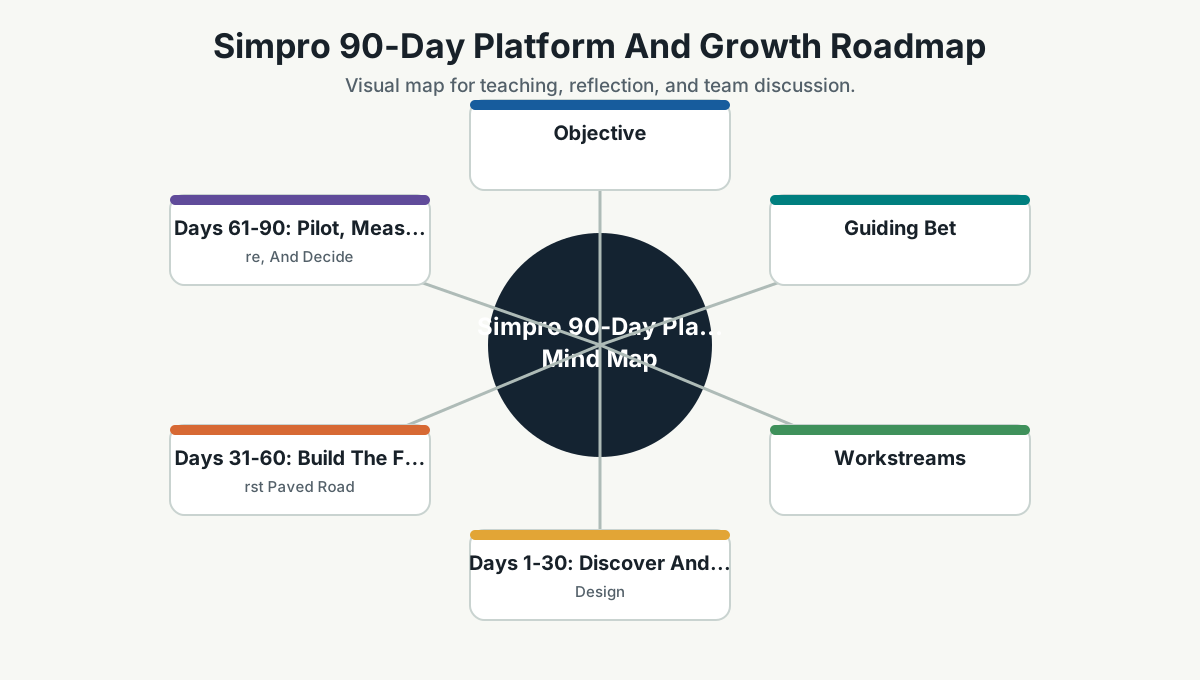
Objective
Create a practical platform and growth engineering foundation that improves delivery speed, operational confidence, developer experience, and product learning.
Guiding Bet
If Simpro creates one usable golden path and one measurable product journey, then the company will reduce delivery friction and make better product decisions without adding heavy process.
Workstreams
| Workstream | Owner Type | Outcome |
|---|---|---|
| Platform operating model | Engineering leadership | Clear mission, scope, roles, and adoption path |
| Golden path | Senior engineering/platform owner | One repeatable service/application template |
| Delivery pipeline | DevOps/SRE owner | Build, test, scan, package, deploy pattern |
| Observability | Engineering/SRE owner | Technical and product workflow dashboards |
| Security baseline | Security-minded engineer | Automated checks and minimum standards |
| Growth analytics | Product/data owner | Event taxonomy and activation dashboard |
| Experimentation | Product/growth owner | Template and first controlled experiment |
| Stakeholder reporting | CTO/engineering leadership | Monthly progress narrative and metrics |
Days 1-30: Discover And Design
Goals
- Understand current delivery friction.
- Select one pilot workflow and one pilot team.
- Define the first platform capabilities.
- Define the first growth event taxonomy.
- Establish success metrics.
Actions
- Map current repositories, services, environments, pipelines, owners, and deployment steps.
- Interview developers about local setup, CI/CD, testing, environments, and release pain.
- Interview product/customer-facing teams about activation and adoption questions.
- Select one pilot workflow such as quote -> job -> schedule -> mobile update -> invoice.
- Choose initial tooling experiments.
- Draft the golden path checklist.
- Draft service catalog metadata.
- Draft product event taxonomy.
Deliverables
- Platform charter.
- Pilot workflow map.
- Current-state friction map.
- Tool experiment backlog.
- Service catalog schema.
- Golden path checklist.
- Growth event taxonomy v0.1.
- Stakeholder one-page update.
Days 31-60: Build The First Paved Road
Goals
- Make the first golden path usable.
- Create visibility into service ownership and workflow health.
- Instrument the pilot product journey.
Actions
- Create or adapt one service/application template.
- Create a standard CI/CD pipeline template.
- Add security checks to the pipeline.
- Add logging, metrics, health checks, and error tracking.
- Create the first service catalog entries.
- Create environment documentation.
- Add feature flag guidance.
- Instrument selected product events.
- Build first technical and growth dashboards.
Deliverables
- Golden path MVP.
- CI/CD template.
- Security baseline v0.1.
- Service catalog MVP.
- Environment guide.
- Observability dashboard.
- Activation or workflow dashboard.
- Experiment template.
Days 61-90: Pilot, Measure, And Decide
Goals
- Validate whether the foundation reduces friction.
- Run or prepare one growth experiment.
- Decide what to standardize next.
Actions
- Onboard the pilot team to the golden path.
- Capture developer feedback.
- Track build/deploy time and failure points.
- Run a release using the release/flag guidance.
- Review dashboard usefulness with product and engineering.
- Run or design one onboarding/adoption experiment.
- Document lessons learned.
- Produce a 6-month platform roadmap.
Deliverables
- Pilot adoption report.
- DORA baseline.
- Developer experience baseline.
- Product journey dashboard review.
- First experiment result or launch-ready experiment plan.
- Platform standards v0.2.
- Six-month roadmap.
- Stakeholder review deck or narrative.
Metrics
Engineering Metrics
- Lead time for change.
- Deployment frequency.
- Change failure rate.
- Mean time to restore.
- Build duration.
- Test pass rate.
- Pull request cycle time.
- Time to create a new service or app.
- Percentage of services with owner, runbook, and dashboard.
Developer Experience Metrics
- Time to first local run.
- Time to first successful deployment.
- Number of manual release steps.
- Number of environment-related blockers.
- Developer satisfaction with golden path.
Product And Growth Metrics
- Time to first value.
- First quote/job/invoice completion rate.
- Weekly active accounts using core workflows.
- Mobile workflow completion rate.
- Invoice-to-payment completion.
- Integration attach rate.
- Experiment velocity.
- Valid experiment rate.
Governance Cadence
| Cadence | Meeting | Output |
|---|---|---|
| Weekly | Platform working session | Decisions, blockers, shipped improvements |
| Weekly | Growth review | Funnel metrics, instrumentation gaps, experiments |
| Fortnightly | Pilot team review | Developer feedback and adoption issues |
| Monthly | Stakeholder review | Metrics, risks, decisions, next investments |
Risk Register
| Risk | Mitigation |
|---|---|
| Platform becomes too theoretical | Build around one real pilot workflow |
| Tooling distracts from outcomes | Define capability before selecting tool |
| Developers see platform as control | Co-design with pilot team and measure friction reduction |
| Metrics become blame | Use metrics as diagnostic signals |
| Growth data is untrusted | Add event validation and clear definitions |
| Security slows delivery | Automate checks and reserve blocking gates for severe risks |
| Scope grows too fast | Limit first 90 days to one golden path and one journey |
90-Day Decision Points
At the end of 90 days, decide:
- Which golden path should become the default?
- Which tools should be adopted, paused, or rejected?
- Which services should enter the catalog next?
- Which product journey should be instrumented next?
- Whether to form a dedicated platform team or continue with a virtual group.
- Which standards should become mandatory because they have proven value.
Team Reference Guide
How To Explain This Page
Use this page as a reference conversation, not as a checklist to read aloud. Start by explaining why the topic matters, then connect it to current team work, and finally ask what behavior should change.
The most useful way to teach this material is to move from concept to example. Explain the principle, show how it appears in daily work, ask the team where it is currently strong or weak, and finish with one small action.
Guidelines For Teams
- Connect the topic to a current project, customer problem, incident, or decision.
- Translate concepts into visible behaviors.
- Keep the guidance lightweight enough to use weekly.
- Capture decisions, examples, and improvements back into the wiki.
- Review the page again after a project, incident, or retrospective to update what the team has learned.
Reflection Questions
- What part of this topic is already working well for us?
- What part is still mostly theory?
- What is one behavior we can change in the next 30 days?