Threat Modeling And Risk Analysis
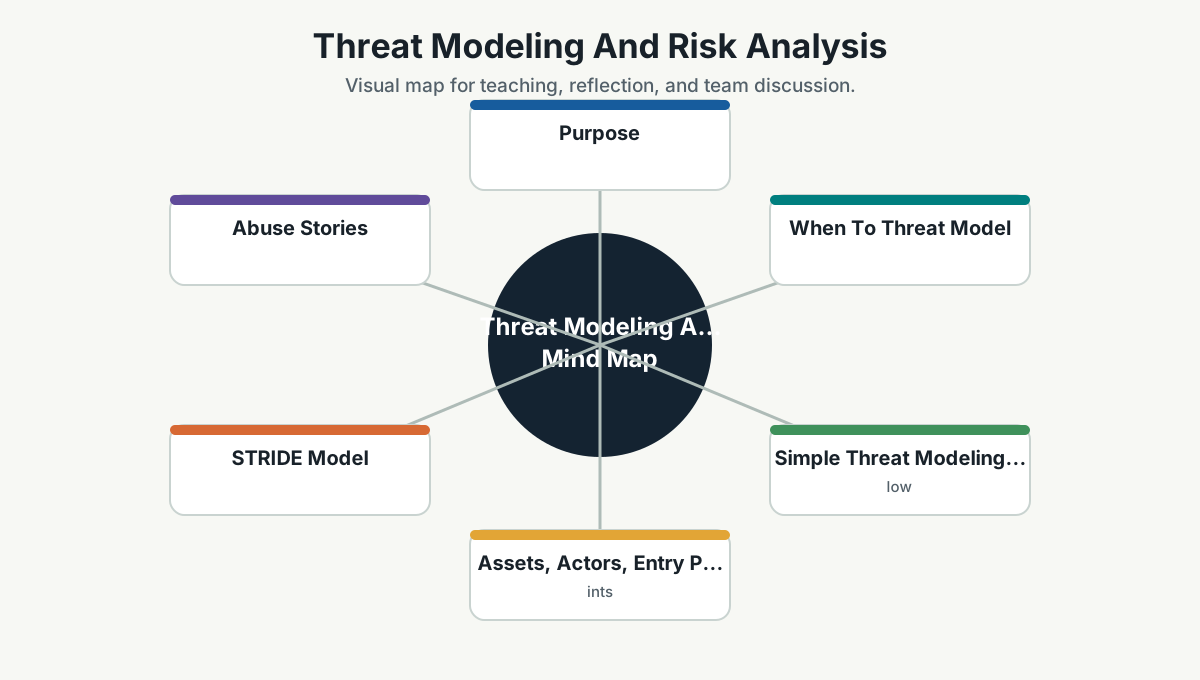
Purpose
Threat modeling is a structured conversation about what can go wrong and what we should do about it.
It is not a security ritual for specialists only. Developers, QA, architects, product owners, operations, and support all see different risks. A good threat model brings those perspectives together before the system is attacked by reality.
When To Threat Model
Threat model when:
- Building a new product or service.
- Adding authentication or authorization.
- Handling sensitive data.
- Integrating with external systems.
- Creating admin features.
- Processing payments or financial data.
- Uploading files.
- Exposing new APIs.
- Changing infrastructure, networking, or identity.
- Using AI with private data or tool access.
Simple Threat Modeling Flow
Use four questions:
- What are we building?
- What can go wrong?
- What are we doing about it?
- Did we do a good enough job?
This is simple enough to use in a design review and powerful enough to reveal serious risk.
Assets, Actors, Entry Points
Start by identifying:
- Assets: customer data, credentials, payments, documents, APIs, admin functions, models, source code.
- Actors: customers, admins, employees, services, partners, attackers, compromised accounts.
- Entry points: web UI, API, file upload, webhook, queue, database, mobile app, CI/CD pipeline, admin console.
STRIDE Model
STRIDE is a useful checklist:
| Threat | Question |
|---|---|
| Spoofing | Can someone pretend to be another user/service? |
| Tampering | Can someone change data or requests improperly? |
| Repudiation | Can someone deny performing an action? |
| Information disclosure | Can sensitive data leak? |
| Denial of service | Can the system be made unavailable? |
| Elevation of privilege | Can someone gain more access than intended? |
Abuse Stories
Write abuse stories alongside user stories.
Examples:
- As an attacker, I try to access another customer's invoice by changing an ID.
- As a compromised employee account, I try to export all customer records.
- As an unauthenticated user, I try to upload a large file to exhaust storage.
- As a malicious integration partner, I send malformed webhook payloads.
- As a user, I try to bypass subscription limits by calling the API directly.
Abuse stories make security concrete. People remember stories better than policy documents.
Risk Rating
Use a simple rating:
- Impact: low, medium, high.
- Likelihood: low, medium, high.
- Detectability: easy, moderate, hard.
- Mitigation owner.
- Target date.
Avoid false precision. The goal is decision clarity, not pretending we can calculate attacker motivation to two decimal places.
Controls
Common control categories:
- Prevent: auth, validation, encryption, least privilege, safe defaults.
- Detect: logs, alerts, anomaly detection, audit trails.
- Respond: incident process, account lock, token revocation, rollback.
- Recover: backups, restore tests, disaster recovery, customer communication.
AI And Threat Modeling
AI can help draft threat models, but humans must validate them.
Good prompts:
- "List possible STRIDE threats for this architecture."
- "Write abuse stories for this admin workflow."
- "Review this API design for broken access control risks."
- "What logs would help detect misuse?"
Never let AI replace context from developers, operations, QA, and product owners.
Team Reference Guide
Guidelines For Teams
- Keep threat models lightweight but real.
- Focus on high-risk flows first.
- Capture decisions in ADRs or design notes.
- Add mitigation tasks to the backlog.
- Revisit threat models after major architecture or data-flow changes.
Reflection Questions
- What is the most valuable asset in this system?
- What can an authenticated but unauthorized user do?
- What would an attacker try first?
- What abuse would our logs fail to show?
Further Study
- OWASP Threat Modeling: https://owasp.org/www-community/Threat_Modeling
- OWASP Threat Dragon: https://owasp.org/www-project-threat-dragon/
- Microsoft Threat Modeling Tool: https://learn.microsoft.com/en-us/azure/security/develop/threat-modeling-tool
- MITRE ATT&CK: https://attack.mitre.org/